BAGHDAD/BUSHEHR/FUJAIRA CITY/DOHA, Mar 14 (INS): West Asia has spiraled into
an unprecedented state of kinetic warfare over the last 24 hours. A series of
high-stakes retaliatory strikes between the United States, Iran and their respective
allies has pushed the region to the precipice of a full-scale continental conflict,
targeting economic lifelines and high-security diplomatic zones.
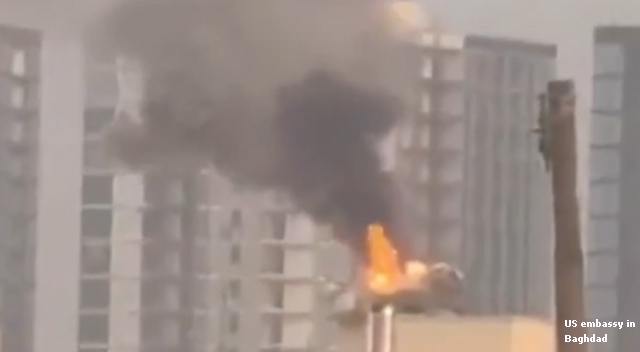
In a brazen defiance of its regional power, the US embassy in Baghdad—widely
considered one of the most fortified diplomatic missions globally—was struck
early Saturday. Iraqi security officials confirmed that a drone/missile successfully
penetrated the Green Zone, impacting a helipad within the embassy compound.
The C-RAM air defence system's radar at the embassy was also blown up by Iran
allied militias. Now, the embassy is defenceless against rocket, artillery and
mortar fire. It was a "dome" of protection for the facility.
Casualties within the embassy are not known, but breaching the Green Zone’s
multi-layered defence marks a significant achievement for the Iranians.
Economic warfare: Kharg Island and Fujairah hit by rivals
President Donald Trump announced late Friday that the US Central Command executed
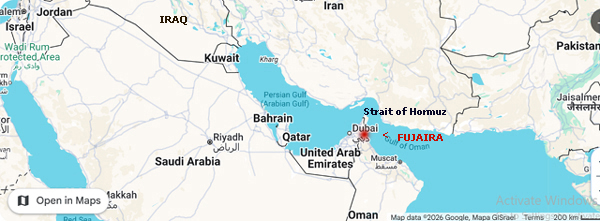
a massive bombing raid on Kharg Island, the terminal responsible for over 90%
of Iran’s oil exports, situated in northern Persian Gulf, 35 km from the mainland.
Trump claimed to have "obliterated" every military target on the island. While
he stated oil infrastructure was spared for now, he warned that the "economic
lifeline" is next if Tehran continues to obstruct the Strait of Hormuz.
Within hours of the Kharg strike, Iran-linked forces reportedly struck the
UAE’s Fujairah port, West Asia’s largest oil storage hub located outside the
Strait of Hormuz, in Gulf of Oman. Drone strikes targeted crude storage tanks,
sending plumes of black smoke over the Gulf of Oman and threatening the world’s
most critical energy supply chain.
Trump deploys 2,500 marines; Evacuation in Doha
In a pivot from his earlier stance of withholding additional boots on the ground,
Trump has ordered the deployment of 2,500 marines and an amphibious assault
ship to the Gulf. This "Marine Expeditionary Unit" is trained for amphibious
landings and island seizures, fueling speculation of a potential ground operation
on Kharg Island or other strategic maritime points.
Simultaneously, the theatre of war has expanded to Qatar. In Doha’s central
Musheireb district, residents reported receiving urgent phone alerts and "National
Alert System" notifications from the Ministry of Interior, instructing them
to evacuate immediately to the nearest safe locations. While Qatari officials
cited "precautionary measures," the move suggests intelligence of imminent missile
or drone threats to the Capital.
Lebanon's Health Ministry reported on Saturday that an Israeli airstrike struck
a healthcare centre in Burj Qalaouiyeh, killing 12 medical workers, including
doctors and nurses, on duty. Israel has warned that the Lebanon will pay an
"increasing price" for Hezbollah's involvement in the broader Iran-US war.
"The region is no longer on the brink; it has stepped over," noted one diplomatic
source in the region. "We are now seeing the systematic dismantling of the post-Cold
War security architecture in the Middle East."
Kharg island: The oil hub is Iran's economic lifeline, situated 35 km
off the coast of Iran in northern Persian Gulf. Trump claims military stations
there are "totally obliterated"
Fujaira: UAE's Fujaira is West Asia's largest oil storage facility,
also a key location for bunkering, but sits on Gulf of Oman, UAE’s eastern coast.
Iran attacked it after Americans hit Kharg Island.
The US-Israeli war with Iran began on February 28 when the US and Israel launched
joint strikes on Iran. Iran's top leadership was eliminated.
What is US C-RAM defence system
C-RAM (Counter-Rocket, Artillery, and Mortar) is a land-based defence system
designed to protect military bases, infrastructure and personnel by detecting
and destroying incoming projectiles in mid-air. It uses radar and high-speed
guns, such as the Phalanx Close-In Weapon System, to shoot down threats like
rockets, mortars and drones, acting as a last line of defence.
It uses sophisticated 3D/4D radar and forward-looking infrared (FLIR) cameras
to instantly track incoming rounds and calculate their trajectory. and has a
20mm rotary cannon that can fire up to 4,500 rounds per minute to destroy projectiles
in the air.
It employs HEIT-SD (High-Explosive Incendiary Tracer, Self-Destruct) ammunition,
which explodes on impact or after missing, minimizing collateral damage to the
ground.
Originally developed for the US Army, the C-RAM defence system was deployed
in high-combat zones like Iraq and Afghanistan for point defence. It was developed
by during Iraq war.
C-RAM systems are vital for protecting forward operating bases and critical
infrastructure from indirect fire attacks, with its capabilities extending to
countering modern threats like unmanned aerial vehicles (drones).






 )
)