NEW BRUNSWICK, (New Jersey) July 21: Next time before you slather your sunscreen
on the skin, check if it is from the batches of Neutrogena or Aveeno brands
which have been recalled by its manufacturer, Johnson & Johnson, (LOOK UP THE LIST) because it contains a
harmful substance, benzene, that causes cancer.
The pharma giant pulled its Neutrogena and Aveeno spray sunscreens from the
stores after it came to light that the products contain the potentially cancer-causing chemical. Earlier the company was caught in another scam, using cancer-causing asbestos in baby powder. It was ordered to pay very heavy compensation.
Sunscreen is used to protect the skin againt ultraviolet rays of the sun by
absorbing or reflecting the UV radiation from the skin. By doing so, it prevents
cancer. Ultraviolet radiation is a well- established carcinogen. Cancer gets
over 3 million people each year, according to JAMA. Sunscreen also prevents
sunburn and premature aging of the skin such as wrinkles, leathery skin etc.
However, it is an irony that the product supposed to prevent cancer has been
found to contain benzene that causes cancer.
While pulling its sprays from market shelves, Johnson & Johnson issued a statement
that the levels of benzene detected in the products were low and would not have
any adverse effect on health.
Strangely, the pharma company also claimed that benzene is not an ingredient
of its sunscreens and it does not know from where the chemical has crept into
its products! So naive! Alas! It was also unusual that the powerful US Food
and Drugs Administration (FDA), which is a watchdog overseeing drug production
in the US, did not have any explanation, exposing its limitations in detecting
and taking care of such risk factors.
The pharma speculated a probable theory about how benzene found its way into
the sunscreens: that some of the ingredients break down into benzene!
The contaminated brands
Benzene was found in the sunscreen products in tests conducted by an autonomous
laboratory, Valisure. The following were the contaminated brands:-
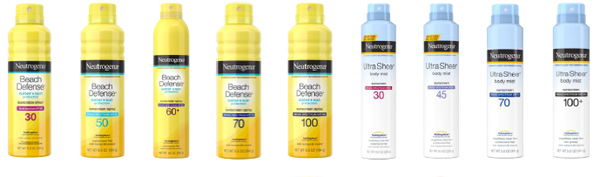
- Aveeno Protect + Refresh
- Neutrogena Beach defense
- Neutrogena CoolDry Sport
- Neutrogena UltraSheer
- Neutrogena Invisible Daily Defense
Besides, Johnson & Johnson (J&J) also understated the recall as "out of an
abundance of caution":
"While benzene is not an ingredient in any of our sunscreen products, it was
detected in some samples of the impacted aerosol sunscreen finished products,"
J&J said in its statement. "Consumers should stop using these specific products
and appropriately discard them."
How to get the refund
It said customers can call with questions and request a refund by completing
a form or calling 1-800-458-1673, giving purchase details like product name,
size and quantity of items purchased, proof of purchase (picture/scan of receipt
or single picture of all items) for refund request of 4 or more units.
"If you have additional questions associated with this Voluntary Recall, please
visit our website or call 1-800-458-1673," the company announced.
The sunscreens tested by Valisure were only a tiny sample of the more than
11,000 registered sun care products on the market.
What is benzene and why is it dangerous?
Benzene (C6H6) is a colourless volatile liquid hydrocarbon present in coal
tar and petroleum. Automobile exhaust and factory emissions contain benzene.
Benzine is different, it is a hydrocarbon-based solvent mixture.
Benzene is a natural component of crude oil, gasoline and cigarette smoke.
It ranks in the top 20 chemicals used for the production of "lubricants, rubbers,
dyes, detergents, drugs, and pesticides, plastics, resins and nylon and synthetic
fibres," according to the US Centers for Disease Control and Prevention.
Benzene is a colourless or light yellow liquid with a sweet odor. It is highly
flammable, and floats on water. It evaporates quickly and is heavier than air
and can sink into low-lying areas, the CDC noted.
Exposure to high levels of benzene causes cancer.
How to check what to buy
GO TO Environmental Working Group (EWG) site and get a free sunscreen guide
on what is good and what is not. It gives an idea on how to select good, safe
sunscreens.
Even in the US there is no cosmetics safety laws. There is no easy way of testing
for contaminants either. The situation is really alarming as most sunscreens
and cosmetics could contain hazardous substances since the market demand is
huge everywhere in the world. There is no easy way you can tell the real from
the contaminated.
The only alternative to sunscreen is wearing clothes full sleeved and long
trouserrs covering the body to block the dangerous, cancer-causing solar rays
of peak hours.






 )
)