CHENNAI, Jun 21 (INS): Seven female migrant workers died and more than 60 others
were hospitalized following a massive ammonia gas leak at a seafoods exports unit
in Tamil Nadu's Tiruvallur district on Sunday. Several workers in critical condition
were rushed to specialized facilities.
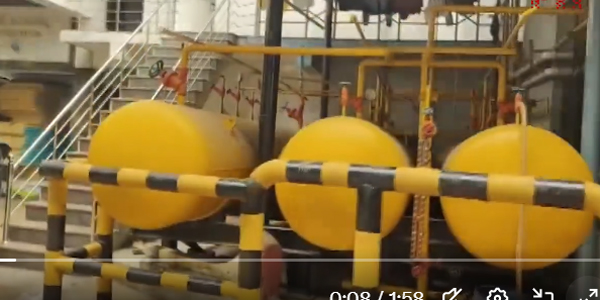
St Peter's Paul Seafoods Exports Private Limited is located in Manjangaranai,
Kannigaipair village, Periyapalayam, Tiruvallur district.
Over 60 people were rushed to nearby medical centres like Vels Hospital and
Venkateshwara Hospital—46 were admitted to Vels Hospital, and 21 to Venkateshwara
Hospital. The 9 most critically ill patients were transferred to the Government
Stanley Medical College Hospital in Chennai.
The leak originated in the seafood processing unit and spread to the on-site
residential quarters where around 120 migrant workers (mostly women from Assam,
Odisha, and Jharkhand) were staying on their weekly day off.
Police, fire services and the National Disaster Response Force (NDRF) were
deployed to contain the toxic gas and conduct rescue operations.
Tamil Nadu Chief Minister C Joseph Vijay ordered a probe and the Tamil Nadu
Pollution Control Board is investigating the cause of the leak.
Ammonia an essential industrial chemical, but harmful for humans
It is an essential industrial chemical because its unique thermodynamic and
chemical properties make it irreplaceable for global food production, refrigeration
and manufacturing.
While it was the standard for ice-making and fridges about a century ago, modern
industries still rely heavily on it, though under much stricter safety regulations.
Agriculture: Over 80% of global ammonia is used to make nitrogen fertilizers
like urea and ammonium nitrate, which sustain global crop yields.
Industrial refrigeration: Large-scale food processing facilities, seafood
factories, cold storage warehouses, and ice-making plants use anhydrous ammonia
as a highly efficient, cost-effective refrigerant (R-717).
Chemical manufacturing: It serves as a foundational building block for
plastics, synthetic fibres, explosives, dyes and pharmaceutical drugs.
Refrigeration: Ammonia was earlier widely used in both domestic home
refrigerators and industrial commercial plants. Due to its toxicity, home appliance
manufacturers replaced ammonia with chlorofluorocarbons (CFCs like Freon) in
the mid-20th century.
Modern large-scale use: Despite being phased out of home kitchens, ammonia
remains the dominant choice for large industrial warehouses and seafood processing
units. It is much more energy-efficient than modern synthetic refrigerants and
has zero Global Warming Potential (GWP) and zero Ozone Depletion Potential (ODP).
Food contamination: Ammonia gas leaks in seafood factories pose distinct
risks to food safety. Ammonia is highly alkaline. When it dissolves into the
moisture of food, it rapidly raises the pH level, altering the food's natural
chemistry. Exposed seafood absorbs the gas, resulting in a pungent, repulsive,
urine-like odour and a bitter taste, making the food completely unmarketable.
High concentrations physically damage and discolour animal tissues, rendering
the food unsafe for human consumption.
Health hazards: Ammonia interacts violently with moisture in the human
body (eyes, skin, and respiratory tract) to form highly corrosive ammonium hydroxide.
Inhalation: Low levels cause coughing, nose irritation, and throat burning.
High concentrations cause immediate burning of the airway, severe respiratory
distress, pulmonary edema (fluid buildup in the lungs), and suffocation.
Eye contact: Exposure to gas or liquid causes severe pain, tearing,
corneal burns, temporary blindness, or permanent eye destruction.
Skin contact: Vapour causes corrosive burns and blistering. Liquid anhydrous
ammonia is stored under pressure at extreme cold temperatures, causing instant,
severe frostbite and chemical destruction of skin tissues upon contact.





 )
)