KABUL, Sept 7: The Taliban on Tuesday, September 7, announced the new interim
Government. Taliban chief Mullah Haibatullah Akhundzada will be the Supreme
Leader and Mohammad Hassan Akhund, who was the Foreign Minister in the 1996-2001
Taliban Government, will be the Prime Minister.
The Taliban Islamic fighters had seized control of the country on August 15,
2021 even as President Ashraf Ghani fled seeing that the militants were closing
in on the Capital Kabul.
The new Government has two Deputy Prime Ministers and no women Ministers. Nor
the Government is inclusive, unlike what the Taliban had stated earlier. Instead,
various terror groups have found their berth in the new dispensation. (See: Baradar statement) Seventeen of
the 33 on Taliban’s Cabinet are on the UN terror list.
Making the announcement, Taliban spokesman Zabihullah Mujahid said the new
Government will be called the "Islamic Emirate of Afghanistan." A policy statement
in English also accompanied the announcement, attributed to Mullah Haibatullah
Akhundzada, the Taliban chief. It said, "Based on this principle (upholding
Sharia law), in the future, all matters of governance and life in Afghanistan
will be regulated by laws of the Holy Sharia." It sought to allay fears of neighbouring countries. “Our message to our neighbors, the region and the world is that Afghanistan’s soil will not be used against the security of any other country,” the statement said. It urged foreign diplomats and others to return as “Their presence is the need of our country.” Education “to all countrymen within the framework of Sharia” was also promised. There was no specific mention of women.
Mullah Haibatullah Akhundzada, Supreme leader & Taliban chief, will
be the head of Religious, Political and Military matters. The position of supreme
leader of the Taliban he has held since 2016. He was chief of military court
in the previous Taliban rule. After the ouster of Taliban by the US in 2001,
he became the head of the religious council. In 2015, the then Taliban chief
Mullah Mansour appointed Haibatullah Akhundzada as one of his three deputies
and later named him as his successor. In 2016 he became the supreme leader after
Mansour died. He allowed his son to be a suicide bomber, and later he died in
an attack.
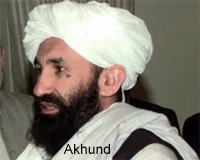
Mohammad Hassan Akhund, the PRIME MINISTER, hails from Kandahar,
the birthplace of the Taliban. He was a political adviser of Mullah Omer. Being
an Islamic scholar and author, Akhund has a religious leaning than military.
He was Governor of Kandahar and also Foreign Minister in the previous Taliban
Government. He had once assaulted some UN officials and had earned the reputtion
of being bad-tempered. After 2001, he has been the head of the Taliban’s powerful
decision-making body called Rehbari Shura, or leadership council, for the next
20 years and had Mullah Haibatullah Akhundzada's backing. Akhund has Pashtun
lineage from Ahmad Shah Durrani, the founder of modern Afghanistan, in the 18th
century.
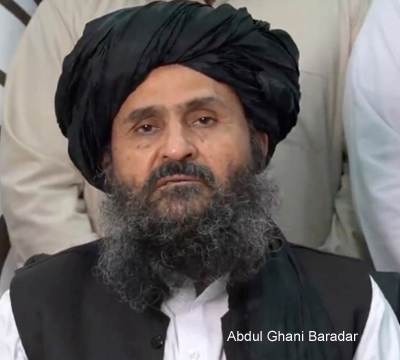
Mullah Abdul Ghani Baradar is the First Deputy Prime Minister.
He is currently head of the Taliban’s political office. He is the co-founder
of Taliban with the late Mullah Mohammad Omer, and had served as Deputy Defence
Minister in the erstwhile Taliban Government. He had signed the deal with the
US for the latter's withdrawal.
Abdul Salam Hanafi (Uzbek) is the Second Deputy Prime Minister.
He is an ethnic Uzbek and Deputy Education Minister in the former Taliban Govt.
Sirajuddin Haqqani is the Interior Minister. He is on the FBI’s
most-wanted list with a $5 million bounty on his head. The Haqqani network dominates
most of eastern Afghanistan. He is the son of the founder of Haqqani network.
Mullah Mohammad Yaqoob, the Defence Minister, is the son of Taliban
founder and revered Mullah Mohammad Omer. Mullah Haibatullah Akhundzada had,
after he became chief, appointed him as head of the powerful military commission
of the Taliban.
Moulvi Amir Khan Muttaqqi is Foreign Minister. He was involved
in the peace talks. He had held Education and Information portfolios in the
previous Taliban rule. Sher Mohammad Abbas Stanekzai - Deputy Foreign Minister.
He has been the head of the Taliban political office. He had got training at
the IMA.
Mullah Abdul Haq Wassiq - the Intelligence chief
Mullah Rahmatullah Najib - Deputy Intelligence chief
Mullah Taj Mir Jawad aks Moulvi Zabiullah - Deputy Intelligence
chief
Mullah Hidayatullah Badri (Gul Agha) - Finance Minister
Sheikh Molvi Nurullah Munir - Education Minister
Mullah Khairullah Khairkhwa - Minister Information and Broadcasting
(He was a Guatemalan prisoner)
Qari Din Mohamamad Hanif (Tajik) - Minister of Economic Affairs
Sheikh Noor Muhammad Saqib - Minister Hajj and Auqaf
Molvi Abdul Hakim - Law Minister
Mullah Noorullah Noori - Minister for Border and Tribal Affairs
Mullah Muhammad Younas Akhundzada - Minister for Development
Sheikh Muhammad Khalid - Minister for Dawat and Irshaad
Mullah Abdul Mannan Umeri - Minister for Public Works
Mullah Muhammad Essa Akhund - Minister for Minerals and Petroleum
Mullah Abdul Latif Mansoor - Minister for Water and Power
Hameedullah Akhundzada - Minister for Civil Aviation and Transport
Abdul Baki Haqqani - Minister for Higher Education
Najibullah Haqqani - Minister for Communication
Khalil Ur Rehman Haqqani - Minister for Refugees
Haji Muhammad Idris - Incharge, Afghanistan Bank
Molvi Ahmed Jan Ahmedi - Incharge, Administrative Affairs
Mullah Muhammad Fazil Mazloom Akhund - Deputy Defence Minister
Qari Faseehuddin (Tajik) - Army Chief
Molvi Noor Jalal - Deputy Interior Minister
Zabihullah Mujahid - Deputy Minister of Information and Broadcasting
Mullah
Abdul Haq - Special Assistant to Interior Minister
Taliban spokesman Zabihullah Mujahid said at the news conference that the acting
Cabinet has been formed to respond to the Afghan people's primary needs. He
said some Ministries remained to be filled pending a hunt for qualified people.
A majority of Ministers are Pashtuns. (42% of the country's population is Pashtun,
27% Tajik and 31 % Hazara and Uzbeks.) There are two Tajiks, one Uzbek and several
Haqqanis in the 33-member Cabinet. With the economy in the doldrums, the humanitarian
crisis is already looming large. The protracted battle has left everything in
ruins. What natural resources Afghanistan has are the mineral deposits and the
opium cultivation. There is already widespread shortages of essential commodities
and the banks are running out of money as the US and other international agencies
have blocked access to funds. Humanitarian aid coming via daily flights from
Qatar is a trickle.


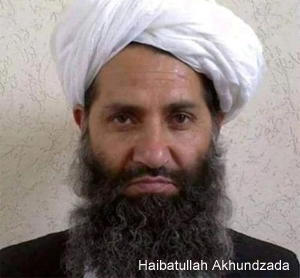 In the interim Taliban Government, Taliban chief Mullah Haibatullah Akhundzada will be the supreme leader and Mohammad Hassan Akhund, a former Taliban Foreign Minister, is the Prime Minister. Taliban co-founder Baradar becomes the Deputy PM. Notable among the Ministers is Sirajuddin Haqqani, the Interior Minister, who is on the FBI’s most-wanted list with a $5 million bounty on his head. Unlike the promise in the withdrawal agreement with the US, the Cabinet is neither inclusive nor free of leaders with terror links and has no women inducted.



 )
)