WASHINGTON DC, June 5: President Joe Biden signed the controversial Bill into
law on Saturday that will suspend the Government's debt ceiling of $31.4 trillion,
averting a first-ever disaster of a global payment default that would have happened
on Monday.
The House had voted 314-117 to pass the Bill that saw a smooth passage on Thursday
through the Senate to the President for his stamp. The Senate voted 63-36.
The deal caps 2024 spending at this year's level and allows 1% increase for
the year after. The deal suspends the debt ceiling until January 1, 2025. The
deal was approved by 149 Republicans and 165 Democrats in the House while 46
'progressive' Democrats opposed the deal. The latter's opposition was over raising
the age limit for work requirements for food stamps for poor people to 55 from
50 years now.
The Treasury Department had already hit its statutory borrowing limit in January
and Treasury Secretary Janet Yellen had written to McCarthy warning over the
depleted resources, if Congress failed to raise or suspend the debt limit by
June 5.
Yellen had warned, failure "would cause severe hardship to American families,
harm our global leadership position, and raise questions about our ability to
defend our national security interests.”
“If we had failed to reach an agreement on the budget, there were extreme voices
threatening to take America, for the first time in our 247-year history, into
default on our national debt," Biden said in his first televised address from
the Oval Office Friday night.
It is to his credit that the Republican majority leader and Speaker of the
House of Representatives, Kevin McCarthy, came into limelight in the negotiations
by playing the role of a unifying force and securing adequate bipartisan unity.
The ruling Democrats had lost its majority in the House in last year's elections.
They do have a wafer-thin majority in the Senate.
In the end, McCarthy appears to be the gainer in the debt ceiling negotiations
by managing a bipartisan vote to lift the limit for the Biden administration.
However, according to observers, he has suffered a heavy loss of credibility
among the hard-liners of his party. His adversaries claim that he did not deliver
on his promise of effecting cuts and making the Pentagon a more efficient agency.
Representative Ken Buck is one among them. In return for the deal, the Republicans
had also demanded $4.8 trillion deficit reduction over 10 years.
When asked by CNN, Buck said, "I don't know if the motion to vacate (asking
McCarthy to vacate his office) is going to happen right away. I do know that
Speaker McCarthy has credibility issues."
During the election of the Speaker in January, far-right Republicans opposed
to McCarthy's candidature had forced him to accept a rule change that will enable
even a single member to seek his ouster if one desired so. That is, just one
member can force a vote to oust him, making his position fragile.
Yet again, on Monday, McCarthy found another area of cooperation with the Democrats
when he joined minority leader Hakeem Jeffries to commemorate the Tiananmen
Square massacre on its anniversary.
"As lawmakers, we may sometimes have disagreements, but one thing we can all
stand behind is freedom everywhere," he said. “The anniversary of the Tiananmen
Square massacre reminds us why the American Idea is so powerful and necessary,
and why the Chinese Communist Party cannot prevail,” the Speaker said.
Lead actors of the historic deal in the Congress:-
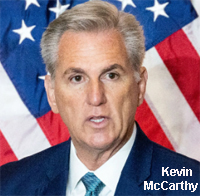
Kevin McCarthy (58) - House Majority Leader (Speaker) (Republican, California);
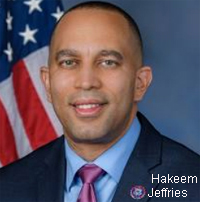
Hakeem Jeffries (52) - House Minority Leader (Democrat, New York);
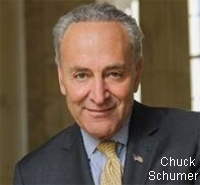
Chuck Schumer (72) - Senate Majority Leader (Democrat, New York);
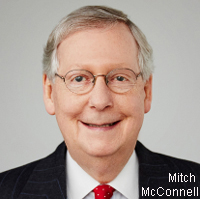
Mitch McConnell (81)- Senate Minority Leader (Republican, Kentucky)






 )
)