HOME       Contact Us      Hire Us       Domestic Airlines        Railway Enquiry     Railway Booking     Hotels & Flights Abroad
NEIGHBOURS CALLING:      Dubai      Malaysia     Nepal     Bhutan
Yogi Logo
indiatraveltimes.com
Yogi Logo
Apple raises older iPhone prices by up to 41% in India; breaks industry rules
iPhone old models
BUY NEW MODELS: Old phones price hiked by up to 41%

There is little use in losing sleep over the new price hikes on older iPhone models; it is a straightforward "take it or leave it" proposition. However, a closer look reveals a glaring mismatch between math and logic in the breakdown of these new numbers.

Forcing an older-generation phone to become 41% more expensive overnight is an unprecedented anomaly in the Indian smartphone market—or any consumer tech market, for that matter. Logically, Apple did not use high-priced components from its latest production run to build phones that were manufactured and packaged long ago. The older inventory sitting in retail boxes right now was assembled using cheaper parts secured under legacy, lower-cost contracts. Any argument to the contrary is fundamentally flawed.

In reality, the overnight price spike on old inventory is not about covering new manufacturing costs; it is a calculated mechanism to insulate global profit margins and protect newly released flagships.

by Our Business Correspondent
NEW DELHI, Sept 11: Apple has raised the iPhone 17 price steeply by Rs 17,000 (from Rs 82,900 to Rs 99,900) in India following the release of the iPhone 18 Pro lineup due to, what they claim, soaring component costs and global memory shortages.

Global demand for memory and storage chips has spiked because tech companies are expanding their artificial intelligence (AI) infrastructure by leaps and bounds.

This high demand for chips has reduced supplies and pushed up the manufacturing costs for consumer electronics.

A point to note: Apple did not release a base standard iPhone 18 model at its recent event. Instead, the iPhone 17 remains the standard non-Pro flagship option, prompting Apple to reset its price upward rather than dropping it as an older model.

ADVERTISEMENT

They have already raised prices on Mac and iPad models earlier in the year.

Apple’s sudden price hike has broken tradition; usually, older models get a price cut when a new lineup arrives, but this time they became significantly more expensive.

Apple's officially retained and active generation on shelves includes the iPhone 17 series, iPhone Air and iPhone 16. Older premium versions like the iPhone 17 Pro and Pro Max have been officially discontinued from the Apple Store to pave the way for the newly launched iPhone 18 Pro lineup.

Official price increases in India

Retained model official price hike (INR):

iPhone 17e - Old Launch Price (INR) - Rs 64,900; New Revised Price (INR) - Rs 79,900; Official Price Hike (INR) - Rs 15,000.

iPhone 16 - Rs ?79,900; Rs 89,900; Rs 10,000

iPhone 17 - Rs 82,900; Rs 99,900; Rs 17,000

iPhone Air Rs 1,19,900; Rs 1,49,900; Rs 30,000

High-capacity variants saw even steeper jumps; for instance, the 1TB iPhone Air surged by a massive Rs 65,000.

The global situation: Apple raised prices globally—including a baseline $100 price increase in the United States across every older iPhone model it kept on sale.

Why India paid more: While the US saw a flat $100 (~Rs 8,400) bump, India recorded some of the steepest price hikes in the world, with costs surging up to 41% on certain models. This massive difference is because India enforces local import duties and a strict 18% GST on electronics components, which compounding onto Apple's baseline manufacturing price increases.

For every Rs 1,000 Apple increases the factory cost, the final retail price increases by Rs 1,000 + Customs Duty + 18% GST on that specific Rs 1,000.

Because India enforces a 22% Basic Customs Duty (BCD) alongside a 18% Goods and Services Tax (GST), the final consumer price absorbs a double layer of taxes on top of Apple's price bump.

The 41% price surge explained

When looking at the baseline models, the retail price jump looks like this:

iPhone 17 (128GB): Went from Rs 82,900 to Rs 99,900. That is a 20.5% increase on the total sticker price.

iPhone Air (128GB): Went from Rs 1,19,900 to Rs 1,49,900. That is a 25% increase on the total sticker price.

High-storage variants (e.g., 1TB): These versions absorbed the highest memory shortages and global component price spikes. Because their base costs rose significantly, the resulting duty and GST calculations stacked much higher, driving the final retail price up by roughly 41% compared to their old prices.

Apple raised the baseline, and the Indian tax structure automatically scaled its cut up with it, creating a much higher final hurdle for buyers in India than anywhere else.

The iPhone Air (1TB variant): This is the exact device that triggered the widespread headlines of an unprecedented 41% price surge in India

The case study: iPhone Air (1TB)

Old retail price India Rs 1,59,900 US $1,399 New retail price Rs 2,24,900 $1,699 Absolute prhce Hike +Rs 65,000 +$300 Sticker Price Increase (%): 40.65% (~41%) 21.4% (~21%)

In the United States, Apple raised the price of this specific 1TB model by $300. At a standard exchange rate, $300 converts to roughly Rs 25,000.

However, Indian consumers are being forced to pay an extra Rs 65,000 for the exact same phone.

Even if you account for India's standard 18% GST and customs duties on that $300 baseline increase, the math doesn't add up to Rs 65,000. This reveals that Apple aggressively altered its regional base pricing structure for India to insulate its global profit margins.

Apple raised their base prices drastically. When India's ad-valorem (percentage-based) taxes were applied to that already-inflated base, it created a compounding penalty for local buyers.

Forcing an older generation phone to become 41% more expensive overnight is an unheard-of anomaly in the Indian smartphone market.

INVESTIGATIVE REPORT: The 41% anomaly—How Apple broke smartphone economics in India

The smartphone market operates on an unwritten, ironclad law: hardware depreciates over time. For over a decade, when Apple launched a new flagship lineup, older iPhone models remaining on the shelves received an automatic, predictable price cut

But this year, Apple didn’t just break the rule—it completely inverted it.

Following the release of the iPhone 18 Pro lineup, Indian consumers woke up to an unprecedented market anomaly. Instead of getting cheaper, older generation hardware on Apple’s shelves saw massive, overnight price spikes. The absolute peak of this anomaly hits the iPhone Air (1TB variant), which skyrocketed by a staggering 40.65% (~41%), moving from an original retail price of Rs 1,59,900 to an astronomical Rs 2,24,900.

While global component shortages triggered the price hike, an investigative look into the numbers reveals that a disproportionate "India Penalty" has left local buyers bearing the global brunt of Apple's margin protection, mobile watchers say.

The anatomy of the 41% anomaly

To understand how a consumer product becomes nearly 41% more expensive after a year on the market, we must look at the exact mathematical delta between the US market and the Indian market:

The US baseline increase: In Apple’s home market, the iPhone Air (1TB) saw a price hike of $300 (moving from $1,399 to $1,699).

The raw currency conversion: At standard exchange rates, $300 converts to roughly Rs 25,000. If India merely adjusted for Apple's global hike, the price should have increased by this amount.

The reality in India: The actual retail price tag in India surged by Rs 65,000—nearly 2.6 times higher than the raw US dollar increase.

Why the math doesn't add up: The cascading tax trap?

The immediate corporate defense for this discrepancy is often aimed at India's local tax ecosystem. India enforces a 22% Basic Customs Duty (BCD) on imported premium smartphones alongside a strict 18% Goods and Services Tax (GST).

Mathematically, these taxes are applied only to the increased baseline value. However, even when you layer these taxes onto the $300 (Rs 25,000) factory price hike, the math falls severely short of a Rs 65,000 consumer spike:

Base increase: Rs 25,000
Customs duty (22 % of Base) Rs 5,500
GST (18% on Base + Duty) Rs 5, 490
Total logical increase: Rs 35,990

There is a Rs 29,000 black hole between the logical taxed increase (˜ Rs 36,000) and the actual shelf price hike (Rs 65,000) that Indian consumers are being forced to pay.

Buffering global margins on Indian backs

This discrepancy exposes two critical corporate strategies:

1. Aggressive regional re-pricing: Apple did not just pass down component costs; it actively altered its regional base pricing structure for India. By pricing the base phone significantly higher in India before duties are even calculated, Apple is using high-growth markets to cushion its global profit margins against Wall Street pressures.

2. The "AI memory hoarding" penalty: The 41% surge specifically targeted the 1TB storage tier. Tech giants are currently locked in a massive infrastructure war, hoarding NAND flash memory and storage chips to power Artificial Intelligence. Because high-capacity phones require more of these heavily constrained components, Apple passed the premium penalty directly to the consumer—and India’s percentage-based tax system compounded that penalty into a historic market shock.

ADVERTISEMENT

For the first time in smartphone history, holding out for last year's model did not save consumers money. It cost them a premium.

Logically, Apple did not use 2026's high-priced components to build phones that were manufactured and packaged long ago. Those older phones sitting in boxes right now were built using cheaper components secured under older, lower-cost contracts. So that argument is "lame."

Actually, the price hike on old inventory is not about covering new manufacturing costs; it is about protecting the new sales.

If Apple had followed tradition and discounted the iPhone 17 by Rs 10,000, a base iPhone 17 would have dropped to ?72,900. With the new iPhone 18 Pro starting at an astronomical ?1,64,900, the price gap between old and new would be nearly Rs 92,000!

Apple knows that if the older models remained cheap, rational consumers would completely ignore the hyper-expensive iPhone 18 series and just buy the cheaper iPhone 17.

Apple resets the price globally for all inventory on shelves to match what it will cost them to build the next batch. That is called profit-windfall on the inventory sitting in warehouses.

Above all, Apple believes the Indian affluent class will absorb the price shock regardless of the math.

Footnote: Apple’s official justification that global component and memory shortages forced this price hike contains a fundamental logical flaw when applied to existing inventory. The iPhone 16 and 17 models currently sitting on retail shelves in India were manufactured long ago using electronic components secured under older, lower-cost supply contracts. By retrospectively raising the retail price of goods that have already been produced, Apple is not covering immediate manufacturing deficits; rather, it is generating a massive profit windfall on old stock while artificially inflating prices to prevent older hardware from undercutting and cannibalizing its hyper-expensive new flagship lineup.

ADVERTISEMENT

SELECTIONS FROM OUR ARCHIVES

WHO GOT WHAT: For Putin, the summit marked a symbolic return to global legitimacy—an escape from diplomatic isolation - a great leap forward, standing on his head. He even floated proposals for joint US–Russia ventures, signaling a bold pivot toward normalization. (Where have the sanctions gone!)

For Trump, the meeting served to boost his self-styled image as a master dealmaker, inching him closer to what some insiders describe as his “obsessive” pursuit of the Nobel Peace Prize. Whether this ambition compromises national interest is a question critics are now asking aloud. Ironically, the original Alaska agenda was left untouched—overshadowed by optics, ambition, and the choreography of power.)

(Aside: Let’s put the Ukraine issue simply. Imagine India is obsessed with national security. It decides to invade and own not the bordering Pakistan or Bangladesh but Sri Lanka or the Maldives—not across a land border, but across the sea—because it perceives growing Chinese influence in the ocean as a threat. Now apply that logic to Russia. Putin wants to annex Ukrainian territory across the strategic Black Sea—not just for land, but to control the strategic sea route itself. Same style, a decade ago it annexed Crimea. So he invaded Ukraine again for more. It is not a war but is an invasion. It’s not just about borders. It’s about expansion and dominance. Now let the common man take the explanation forward! Let us not be confused! Ukraine is not at war! There is no war!)

  • The State will have a two-language formula for the schools—Tamil and English.
  • Goodbye to the fraud called entrance exams: No competitive entrance exam for higher education - Admissions will be based on Class 11 and 12 marks. (See footnote)
  • The SEP and the State's determination to bring education back to the State List constitute a structured resistance to the Centre’s ultimate designs for centralisation of governance.

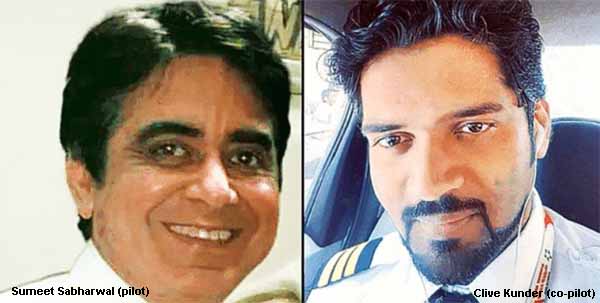
The preliminary probe report claims both the fuel control switches were in ‘CUT OFF’ mode moments after lift-off (FADEC may be set to register like that). But the switches are mounted on the centre pedestal, between the seats of the captain and the first officer at arm's length. Who can switch it off? Transitioning is a two-stage manual procedure and that makes a clicking sound also. Not one, both switches! The switches are so protected by multiple layers of physical and procedural safeguards and guarded by metal brackets for a third party to meddle with easily. The cockpit is locked during takeoff. They are handled only for start and after landing, also in emergencies. Is it possible that the pilot just missed to put the switch to RUN while on the runway and the aircraft, a good one, was running on residual fuel? Which it can do for 20 to 40 seconds. The Air India flight stalled after 32 seconds of passing the Go/NoGo point.

(Soon after the videos came into public domain, the next day of the crash, our aviation expert had stated in these columns, the crash had something to do with the fuel line.)

(Soon we will put together another diverse discourse with experts to dispel any nagging doubts surrounding aviation dynamics that are stirring curious minds in the current context.)

TRUMP: "We'll have to take a look. We might have to put DOGE on Elon. You know what DOGE is? The monster that might have to go back and eat Elon. Wouldn’t that be terrible? He gets a lot of subsidies (Tesla and SpaceX)." Nobody on earth ever got so much of Government subsidies as Musk, The New Trump declared audaciously when the 'Beautifiul Bill' that scraps Tesla subsidies made its entry into the Capitol. Musk knew the Bill spelt his death knell...

The incident has triggered a debate on social media whether the officer refused to take orders from a party leader or he was accused of any corruption, some netizens justifying the handling in either case, that Ratnakar was blocking public welfare work! It is true the Govt machinery has been the enemy Number One of the people of this country, existing for itself and for these politicians, for well over seven decades. India will never make an inch of progress - real progress, not make-believe-progress - unless and until this machinery is eliminated.

The irony lies in her illustration of her experiences in the country she has been living in for the last four years. What it really is!

ANALYSIS: There have been cases of Britons going to Switzerland to get rid of a miserable life. Now once the House of Lords also passes the Terminally Ill Adults (End of Life) Bill, terminally ill Britons can call it quits with the help of a medical practitioner here itself. But the measure when comes into practice, will have very serious social consequences, it is feared. There won't be comparisons, even as tropes in Latin American folklores. The worst case scenario is of those who are not terminally ill also trying to misuse the provision to leave this world early when life with dignity is not available. But that is, in fact, a political question and not a moral imbroglio!

The CCTV footage and the video circulating on social media do not indicate any serious abnormalities in takeoff or descent, it has been confirmed. The disaster is becoming curiouser and curiouser. The flight path was not curvy. And the aircraft maintained a steady, gliding descent with its nose straight and the wings perfectly level. The pilot's distress call does not specify what prevented lift and climb-out. Here are some expert opinions. The sole purpose is to raise travellers' awareness about air travel.

Many of the victims were charred beyond recognition, making identification difficult. Three hundred nineteen body parts have been sent for DNA matching with relatives to determine the identities.

  • The Udhampur-Srinagar-Baramulla line provides Kashmir with all-weather connectivity and integrates the Valley with the rest of India.
  • The saying 'Kashmir to Kanyakumari' is now a dream come true.
  • The Chenab bridge on the line, an engineering marvel, is the world's highest railway bridge, taller than the Eiffel Tower. (Video: File)

A comment on social media on Kanimozhi's answer on the question of national language read: "Daughter of Kalaignar M. Karunanidhi. Delivered the Birthday Present to her Father!!" (Karunanidhi was born on June 3, 1924) (Today's headlines )

Trump said, "Elon is not really leaving" and will be "back and forth" to the White House because DOGE is his "baby." "I think he’s going to be doing a lot of things.”

Musk wrote: "My scheduled time as a Special Government Employee comes to an end... The @DOGE mission will only strengthen over time as it becomes a way of life throughout the government." Now on it will be on auto-pilot.

PROGNOSIS: DOGE was prematurely born to protect the country by aborting an impending socio-economic disaster which very few people could see coming.

Although its immediate job was to save American taxpayers billions by slashing waste, eliminating fraud, cutting Government bloat and ensuring utmost efficiency in administration for the good of the people. (Today's headlines )

"Coming from a system like in England, empowering," she says she never had an idea of this sort of experience... being asked to “socialise with middle-aged men” who financed the event...humiliating...

Originally from Junagadh, Gujarat, Pataudi was relocated to Etawah Lion Safari in September 2019 before being transferred to Gorakhpur Zoo in 2021. Recently it was receiving treatment for pancreatic and liver infections. After tigress Shakti died in the zoo on May 7 due to bird flu, Pataudi was shifted to Kanpur. Some birds are also reported to have died mysteriously around Gorakhpur. All zoos in UP are closed for fear of a bird flu outbreak.

Three other animals too had died - a tiger, a leopardess and a female wolf. Wolf Bhairavi died last Saturday, leopardess Mona died the Thursday before that and tiger Kesari died on March 30. Some of them had Shakti's symptoms but the cause of death has not been confirmed yet.

As tourist inflow is an indicator of normalcy returning to an erstwhile terrorist infested Valley, the Government has been trying hard to make everything travel-friendly, launching lot many projects and bringing Kashmir on the national rail map that physically completes the process of Kashmir's integration with the rest of India. And that defeats the designs of Pakistan eyeing Kashmir and simply explains a recrudescence of terrorism in J&K.

The committee headed by justice Kurian Joseph will study Centre-State relations and make proposals to ensure foolproof separation of powers.

"It's a big victory not just for Tamil Nadu but for all Indian States. DMK will continue to struggle for and win State autonomy and Federal polity," Chief Minister MK Stalin said.

Of 2.08 km in length, it features 99 spans and a 72.5-metre vertical lift span that rises up to a height of 17 metres, facilitating smooth movement of ships while ensuring seamless train services to the holy town of Rameswaram on Pamban island.

ANALYSIS: There is a lot of hue and cry around the world over Trump's tariffs. But tariff, simply put, is a tax. But unlike tax, it affects the exporting country too. Domestic prices will go up for some time. Nothing more will happen, good or bad!

What motivated Trump's newfound policy, apart from being a stunt to justify his existence in the White House, is a false realisation that increased tariff will make foreign goods prohibitive, thereby boosting local production, and create more jobs, and more prosperity will ring in! If that is true, India would have been shining by now: Producing own Rolls-Royce La Rose Noire Droptail and Scotch Whiskies! And what about coconut and palm oil by America! (Today's headlines )

ADVERTISEMENT
Previous Files
ARCHIVES

ADVERTISEMENT

Neighbours
Calling

Bhutan
Nepal
Malaysia
Dubai

Vaishno Devi Yatra is suspended since July 19 due to heavy rain and landslides
Lakhs visit the temple in Katra a day
Paleontologist Dr Alan Grant of Jurassic Park, actor Sam Neill dies in Sydney at 78
A legendary Dr Grant
Apex court stays Madras HC order to enforce ban on cow slaughter across Tamil Nadu
Cow is a religious symbol
"Nightingale of South India", veteran playback singer S Janaki dies at Apollo in Mysuru
Playback singer
Modi hoists saffron flag atop Ram Mandir in Ayodhya, marking completion of temple construction
Guru Purnima celebrations on Thursday, July 10: Why Hindus celebrate Guru Purnima; its significance
Krystyna Pyszková passes on Miss World crown to Opal Suchata from Thailand
Amarnath yatra commences on July 3, concludes on Aug 9; registration dates to be announced
Maha Kumbh Mela: Millions of pilgrims take holy dip at Triveni Sangam in Prayag on Vasant Panchami
Veteran Malayalam playback singer P Jayachandran passes away at 80 after prolonged illness

Fashion & Lifestyle
Cuisines
Yoga & Asanas
Fairs, Festivals & Melas
Religion & Cult
Pilgrimage
Art & Culture
History, Legends & Mythology
Ayurveda
Free Ayurveda Consultation
ADVERTISEMENT

ARCHIVES
A Window On India
Fashion & Lifestyle
Yoga & Asanas
Fairs, Festivals & Melas
Religion & Cult
Pilgrimage
Art & Culture
History, Legends & Mythology
Ayurveda
News (Archives)
Travel News
Travel News Archives
Travel News Index


Custom Search


Home
Contact Us

NOTE: Free contributions of articles and reports may be sent to: IndiaTravelTimes[at]gmail[dot]com

DISCLAIMER
All Rights Reserved © 2026 www.indiatraveltimes.com